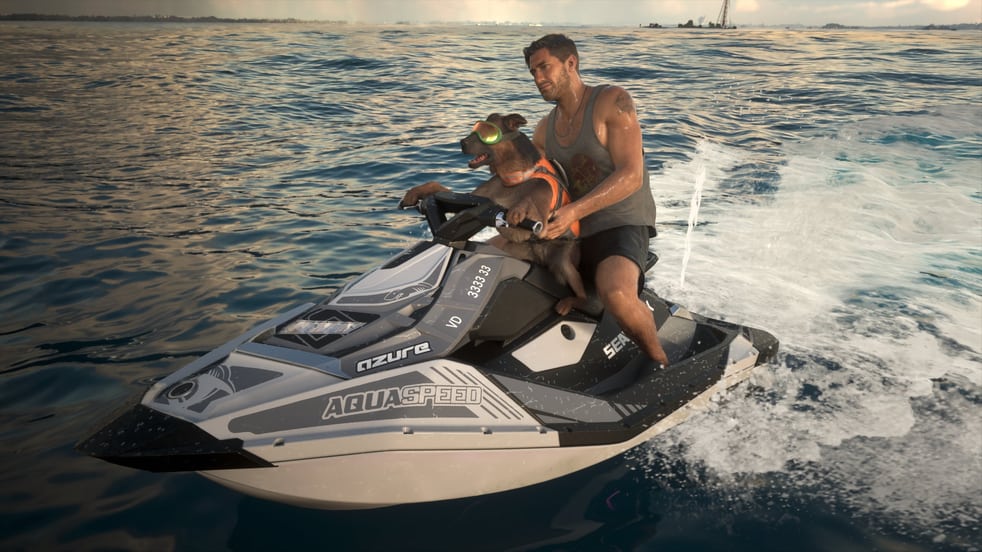
A jet ski rewards clean inputs more than constant throttle. On open water, speed is easy to gain, but keeping the craft on the right line requires control over acceleration, steering, and approach angles. A rider who prepares for each turn can preserve more momentum than someone who holds full speed and reacts at the last second.
The water around Vice City and the wider state of Leonida gives jet ski riding several different challenges, including open sea, narrow channels, shoreline structures, boat traffic, wakes, and uneven surfaces. Players searching for GTA 6 Boosting should also keep in mind that racing performance comes from route knowledge and handling practice, not from assuming that every water section can be cleared with maximum speed.
This guide focuses on practical jet ski riding, high-speed cornering, race lines, water obstacles, and recovery techniques. Exact control layouts may vary by platform or control settings, so the advice is based on the handling principles that apply during play rather than fixed button claims.
Understanding Jet Ski Movement
A jet ski reacts quickly, but it still carries momentum after the rider changes direction. A small steering input at low speed can produce a controlled turn. The same input at high speed may push the craft far outside the intended line.
The main factors are:
- Throttle control, which affects acceleration and reaction time.
- Steering angle, which determines how tightly the craft turns.
- Entry speed, which decides whether the turn remains manageable.
- Water conditions, including wakes, waves, traffic, and nearby structures.
- Exit direction, which determines how quickly the next straight section can begin.
Good riding separates these actions into stages. Build speed on a clear stretch, reduce input before the turn, guide the jet ski through the corner, then accelerate after the craft points toward the next section.
Preparing for a Water Race
A race route becomes easier to manage when it is divided into short sections. Each section has a different purpose and demands a different speed level.
Divide the course into control zones
Use the following structure while learning a route:
- Acceleration zone
A clear stretch where the jet ski can gain speed. - Approach zone
The area before a corner, obstacle, or narrow passage. - Technical zone
A section that requires controlled steering, reduced speed, or careful positioning. - Exit zone
The area where the craft straightens and begins building speed again.
This approach helps prevent late reactions. Instead of staring only at the next turn, look for the section after it. A corner that appears harmless may lead directly into a dock, another rider, or a narrow channel.
Keep the camera steady
A stable camera makes it easier to judge the distance between the jet ski and the shoreline. Avoid frequent camera movement during a technical section. Look farther ahead on open water, then shorten your focus near docks, rocks, beaches, and other vehicles.
The camera should help you see the next decision early. If the route ahead is hidden by a wake or another craft, reduce speed until the path becomes clear.
Acceleration and Throttle Control
Build speed on clear water
Use strong acceleration on a straight line with enough space on both sides. Keep the nose pointed toward the next major change in direction and avoid unnecessary steering. Small corrections can make the jet ski drift away from the fastest route.
Full throttle is most useful when the next section is visible and predictable. If a tight turn is approaching, reduce speed before the corner rather than waiting until the craft is already too far outside the line.
Match speed to the route
| Route section | Suitable riding approach |
| Long, open straight | Accelerate while holding a stable heading |
| Gentle bend | Maintain moderate throttle and use a wide arc |
| Tight corner | Reduce speed before steering |
| Narrow channel | Prioritize alignment and visibility |
| Wake or uneven water | Keep the craft stable and avoid sudden input |
| Corner exit | Straighten first, then accelerate |
The purpose of slowing down is to protect the next section. A small speed reduction can prevent a large correction, collision, or loss of momentum.
Turning at High Speed
Begin steering before the corner
Late steering creates wide turns. Start the turn while there is still enough room to adjust the line. The jet ski should be pointed toward the exit by the time it reaches the tightest part of the corner.
Use one smooth steering movement whenever possible. A sharp input followed by an immediate opposite correction often produces an unstable path and makes the exit harder to control.
Use the right line for the water
A wide line is safer on open water, especially when the surface is uneven or the corner has limited visibility. A tighter line can save distance when the inside edge is clear and the exit is easy to see.
Choose a wider arc when:
- Another rider is close by.
- A wake is moving across the corner.
- The inside line contains posts, boats, or shoreline objects.
- The exit cannot be seen clearly.
- The turn leads into a narrow section.
A tight line works best when the rider can identify the entry, middle, and exit before turning. Cutting close to the inside edge without a clear view can turn a fast route into a collision.
Straighten before using full acceleration
Do not return to maximum throttle while the jet ski is still rotating through the corner. Finish the steering movement first. Once the craft faces the next section, apply acceleration and hold the new line.
This creates a better exit and reduces the chance of drifting toward a dock, another vehicle, or the edge of a channel.
Managing Waves and Boat Wakes
Wakes can change the jet ski’s direction and timing. A large wake may lift the front, push the craft sideways, or interrupt a planned turn. The effect becomes harder to control when the rider is already steering sharply.
Use this sequence when approaching a wake:
- Reduce speed slightly if the approach is angled.
- Point the jet ski in the direction you want to continue.
- Avoid major steering input while crossing the wake.
- Wait for the craft to settle before starting the next turn.
A direct approach usually gives better control than crossing a large wake at a sharp angle. The goal is to prevent the craft from landing sideways and sliding toward another vehicle or shoreline object.
Small waves can often be crossed without a major speed change. The greater risk comes from combining uneven water with a tight turn, a narrow opening, or a late correction.
Passing Other Riders
A pass on water requires more space than a pass on a road. The jet ski needs room to move sideways, and the rider ahead may change direction at the same time.
Before moving alongside another rider, check:
- The open space on the intended side.
- The distance to the next corner.
- The direction of nearby wakes.
- The position of other vehicles.
- The available room after the pass.
A long straight usually provides the safest passing opportunity. Move to the side early, hold a predictable line, and return toward the racing path only when there is enough room.
Passing on the inside of a corner can save distance, but it also leaves less room for recovery. If two riders approach a narrow section together, a brief reduction in throttle may prevent contact and preserve more time than an aggressive move.
Dealing With Water Obstacles
Docks, moored boats, posts, rocks, low barriers, and shallow shoreline areas become difficult to avoid at high speed. The rider needs enough time to identify the open side before making a correction.
Use one clear correction
When an obstacle appears:
- Reduce speed to create more reaction time.
- Choose the clearer side.
- Make one controlled steering movement.
- Hold the new line until the obstacle is behind you.
- Recenter the jet ski before accelerating.
Repeated left and right movements create a poor line. The craft may avoid the first object and move directly toward another one.
Give the inside edge extra room
The inside of a turn may appear to offer the shortest route, but it can contain objects hidden by the camera angle or by another vehicle. A slightly wider line gives more time to react and makes the exit easier to see.
This is especially useful when moving from open water toward a narrow channel. Enter at a shallow angle, align the craft with the passage, and increase speed only after the jet ski is centered.
Building a Faster Racing Line
A useful racing line has three parts:
- Entry, the speed and angle before the turn.
- Middle, the point where the jet ski reaches its closest approach to the inside.
- Exit, the direction and speed carried into the next section.
The exit often determines the quality of the entire corner. A rider who takes a slightly wider entry but leaves the turn aligned can gain distance on the following straight. A rider who enters too fast may lose time through several corrections.
During a practice run, look for:
- The longest clear straight.
- The first corner that requires early speed control.
- Areas with limited visibility.
- Sections affected by wakes or boat traffic.
- Safe passing areas.
- The point where acceleration can resume.
Learn the route as a series of speed changes and alignment points. Memorizing only the direction of each turn does not prepare you for traffic, waves, or a blocked line.
Recovering From a Missed Turn
A wide corner does not always mean the run is lost. Reduce throttle and guide the jet ski toward open water. Trying to force an immediate return to the racing line can create a second mistake.
If the craft becomes misaligned:
- Stop making large steering movements.
- Find the clearest open direction.
- Rebuild the heading gradually.
- Accelerate after the nose points along the route.
After a collision or sudden loss of speed, regain control before attempting another pass. A stable recovery usually costs less time than a rushed correction that causes another impact.
A Practical Training Routine
Use a quiet stretch of water to repeat the same sequence:
- Accelerate along a straight line.
- Reduce speed before the turn.
- Enter with a wide arc.
- Hold the line through the middle of the corner.
- Straighten the jet ski at the exit.
- Accelerate after the craft is aligned.
- Repeat the turn with a slightly tighter line.
This routine shows whether a mistake comes from entering too quickly, steering too late, or accelerating while the jet ski is still turning.
Practice the transitions between corners as well. A single turn may feel easy, while the short section that follows creates the real loss of speed. The strongest route keeps the jet ski pointed toward the next opening with few major corrections.
Choosing a Consistent Riding Style
Aggressive riding works best on clear, open water with good visibility. It becomes less reliable near traffic, wakes, narrow channels, and several turns placed close together.
A controlled approach gives the rider more options:
- Accelerate on open straights.
- Reduce speed before technical sections.
- Use one smooth steering input.
- Keep the exit visible.
- Leave room around other vehicles.
- Return to full throttle only after the craft is aligned.
Players who encounter GTA 6 Boosting for sale offers should separate those claims from normal jet ski performance. Racing results come from route practice, throttle control, and clean movement inside the game. A service listing cannot replace learning how the watercraft responds to speed and steering.
A dependable jet ski run is built from small decisions. Hold speed where the water is clear, prepare for turns before reaching them, cross wakes with a steady heading, and give obstacles enough space for a controlled correction. With those habits, water racing becomes a sequence of planned entries, stable corners, and strong exits.